KOREA.NET: K-Food Companies See Malaysia as Their Southeast Asian Gateway
This article is part of the Food & Drinks Malaysia by SIAL (FDM2026) series
 |
| K-Food Companies See Malaysia as Their Southeast Asian Gateway |
Published on Korea.net’s Site for Honorary Reporters on July 30, 2026
2026-07-30
By Honorary Reporter Ing Yeen Oh from Malaysia
Photo by = Ing Yeen Oh
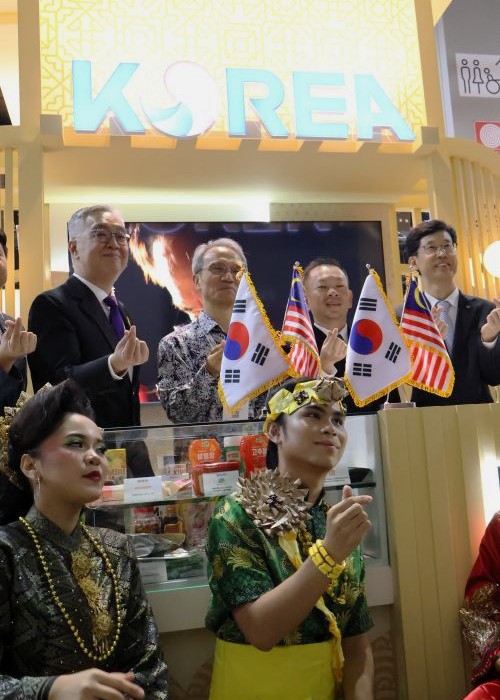
Food & Drinks Malaysia by SIAL (FDM2026), held July 21–23 at the Malaysia International Trade and Exhibition Centre (MITEC) in Kuala Lumpur, brought together international food and beverage companies under the theme "Savour Southeast Asia: The Epicentre of Taste, Trade & Talent."
Several Korean companies participating in the exhibition said they view Malaysia as more than just a consumer market, describing it as a strategic gateway for expanding into Southeast Asia and beyond.
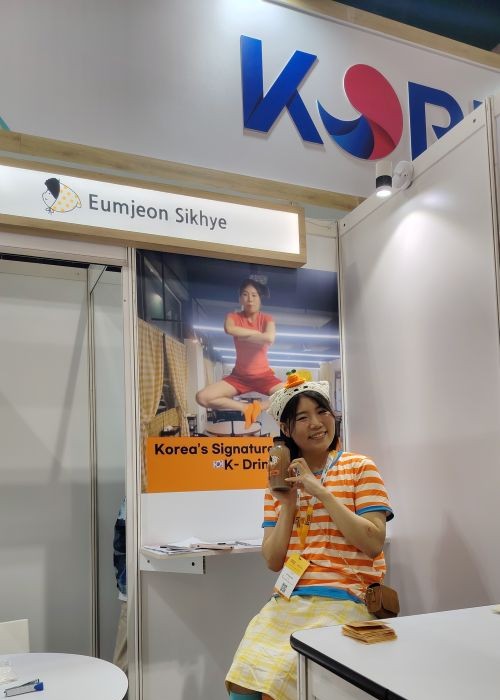
For Youjin Agricultural, the exhibition marked its first overseas showcase. Chief Executive Officer (CEO) Soyeon Park said, "I chose to come to Malaysia because I see its potential. Malaysia is a central hub and a gateway to Southeast Asia."
Park said she noticed similarities between Korean and Malaysian flavors during her market research.
"Our persimmon gochujang is similar to Malaysia’s sambal, while our signature sikhye reminds me of sugarcane juice."
Good Seoul Business Development Manager Johnny Kim said the company's tteokbokki is already available at C.U. convenience stores in Malaysia, and it hopes to introduce more products, including halal corn dogs and plant-based dumplings.
"Compared with other Southeast Asian markets, Malaysia has stronger purchasing power and a greater interest in Korean culture and Korean food."
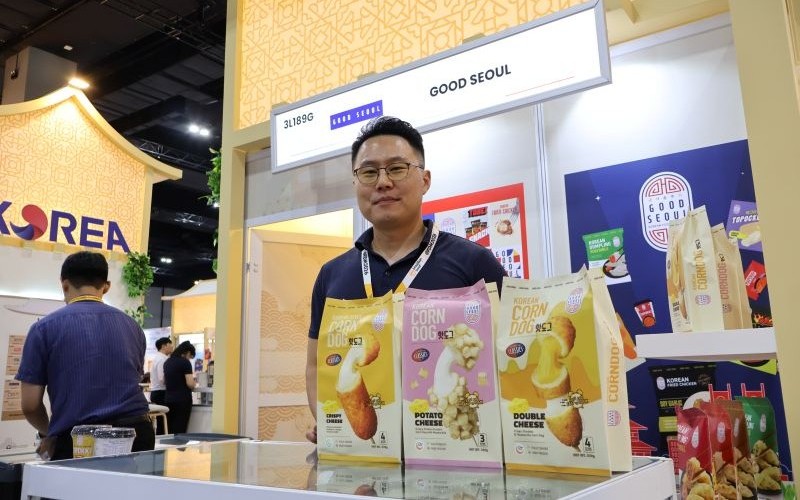
Kim added that the company's products are already exported to the Middle East, Europe, North Africa, the Gulf Cooperation Council (GCC) countries, Mexico and other international markets.
Daehae Food President Hwayong Song also described Malaysia as a strategic regional hub.
"It serves as an important gateway for trade with neighboring countries, the Middle East and Australia. SIAL Malaysia is an ideal platform to connect with international markets."
Nambada CEO Moon Sung Jun, whose company specializes in anchovies, said he hopes to introduce high-quality Korean anchovies to Malaysia.
His products are currently exported to China and Australia, and he hopes Malaysia will become another export destination because anchovies are widely used in Malaysian cuisine.
Moon added that he was introduced to Malaysia's national dish, nasi lemak, and was pleased to learn that anchovies are one of its key ingredients.
The exhibitors said the response from Malaysian buyers exceeded their expectations, reinforcing their confidence in Malaysia as a regional business hub.
Although their products ranged from traditional beverages and anchovies to tteokbokki and plant-based dumplings, the companies shared a common goal: using Malaysia as a springboard into Southeast Asia while adapting their offerings to local tastes and halal requirements.


Comments
Post a Comment