Korea.net: Korea and Malaysia Join Forces to Protect K-Halal Consumers
This article is part of the 2026 ASEAN K-Halal Food Fair series

Published on Korea.net’s Site for Honorary Reporters on June 23, 2026
2026-06-23
By Honorary Reporter Ing Yeen Oh from Malaysia
Photo by = Ing Yeen Oh, The Embassy of the Republic of Korea in Malaysia, aTCenter Kuala Lumpur
The growing popularity of Korean food in Malaysia has created new opportunities for exporters, but it has also brought challenges, including the rise of counterfeit and imitation K-brand products.
To help address these issues, the Korea Agro-Fisheries & Food Trade Corporation (aT), Malaysia's Ministry of Domestic Trade and Cost of Living (KPDN), the Embassy of the Republic of Korea in Malaysia and the Korea Intellectual Property Protection Agency jointly organized the Joint Seminar on Cooperation to Expand the Distribution of K-Halal Food at the One World Hotel in Petaling Jaya, near Kuala Lumpur, on May 18.
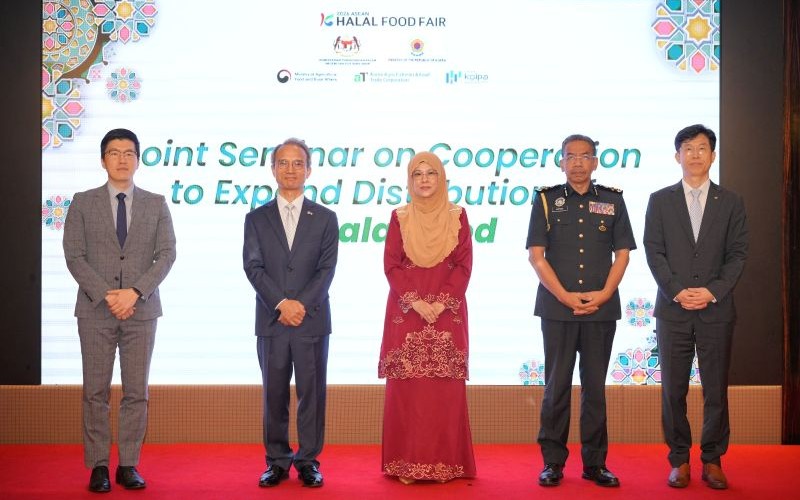
The seminar focused on protecting consumers, strengthening distribution channels and preventing the distribution of counterfeit K-food products. It also explored ways for businesses and enforcement agencies to identify authentic Korean halal-certified products.
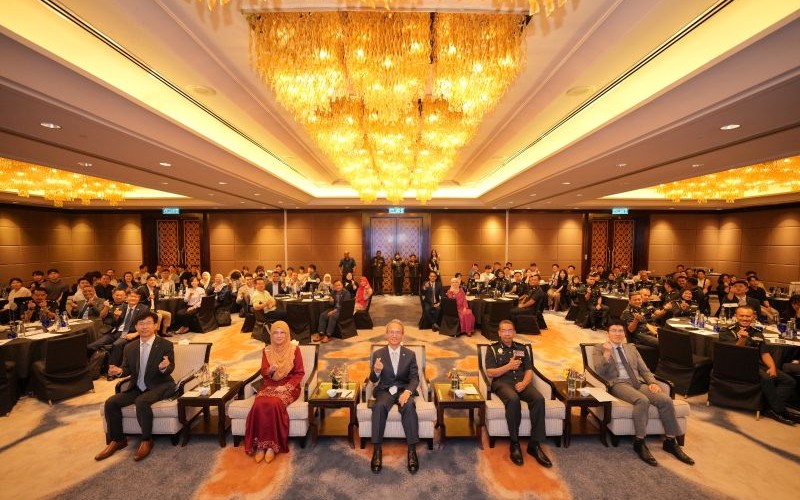
Representatives from KPDN, the Ministry of Agriculture and Food Security (KPKM), the Department of Islamic Development Malaysia (JAKIM) and the Federal Agricultural Marketing Authority (FAMA) attended alongside Korean exporters, buyers, retailers and government officials.
As someone who regularly shops for Korean groceries in Malaysia, I found the seminar particularly relevant. I have occasionally picked up products that appeared to be Korean, only to discover after reading the fine print that they were manufactured elsewhere. While there is nothing inherently wrong with products inspired by Korean cuisine or Korean flavors, the experience reminded me how easily consumers can mistake "Korean-style" products for those that actually originate from Korea.
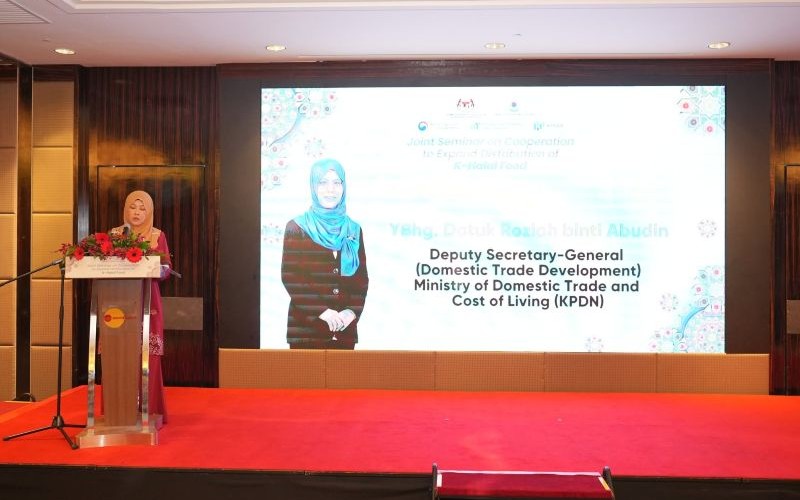
According to aT, the seminar also aimed to help companies better understand Malaysian food-labelling regulations and halal compliance requirements while improving the export environment for Korean food products.
Chung Sang Yoon, director of the Korea IP Center Bangkok, shared practical methods for identifying counterfeit and imitation products during distribution. Operated by the Korea Intellectual Property Protection Agency, the Bangkok-based regional office supports Korean companies in protecting their intellectual property rights across ASEAN markets.
Meanwhile, KPDN enforcement officers explained Malaysian import food-labelling requirements, common cases of product misidentification and regulations governing imported halal food products.
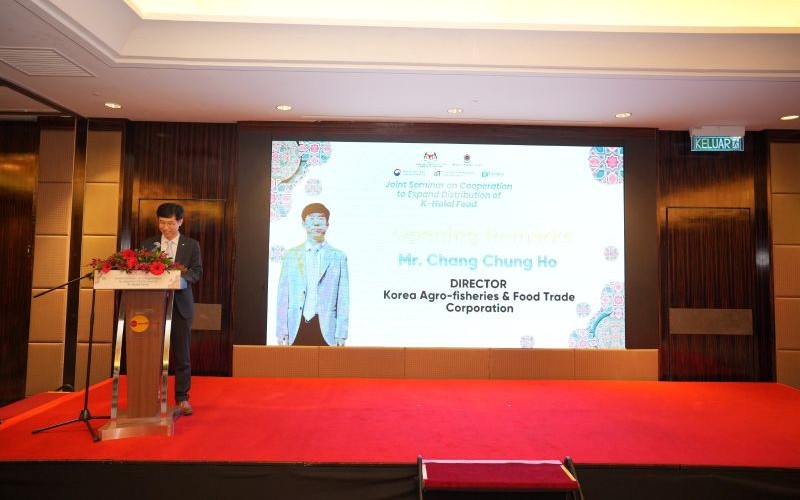
In his welcoming remarks, aTCenter Kuala Lumpur director Chang Chung Ho described the event as the first joint seminar co-hosted by the Korean government and KPDN.
"Through this seminar, we aim to help Malaysian consumers distinguish authentic K-Halal products from counterfeit ones," he said.
Chang added that K-Halal food had become "a natural part of daily life for Malaysian consumers" and expressed hope that the seminar would further strengthen cooperation between Korea and Malaysia while supporting the continued growth of K-Food in the country.
Following the seminar, a business-to-business export consultation session was held between Korean exporters and Malaysian buyers at the same venue.
Ambassador of the Republic of Korea to Malaysia Yeo Seung-bae also held a luncheon meeting with KPDN Domestic Trade Development deputy secretary-general Datuk Roziah Abudin to discuss further bilateral cooperation.
As someone who regularly shops for Korean groceries in Malaysia, I appreciated that the seminar focused not only on helping businesses, but also on improving consumer awareness. As Korean food continues to gain popularity in Malaysia, initiatives such as this seminar can play an important role in protecting both consumers and legitimate Korean brands. As someone who regularly shops for Korean groceries, I appreciated that the seminar focused not only on helping businesses but also on improving consumer awareness.
I hope initiatives like this will be complemented by more public awareness campaigns in the future. Better consumer education would help shoppers make informed purchasing decisions while supporting authentic Korean brands that have invested in building trust in overseas markets.


Comments
Post a Comment