Korea.net: Korean rice-cake maker eyes Malaysian market 2026-08-28
This article is part of the Food & Drinks Malaysia by Malaysia International Food & Beverage Exhibition (MIFB) 2026 series

2026-08-28
By Honorary Reporter Ing Yeen Oh from Malaysia
Photo by = Ing Yeen Oh
At the Malaysia International Food & Beverage Exhibition (MIFB), a display of donut-shaped rice cakes stood out at the Korean pavilion.
Held at the Kuala Lumpur Convention Centre from July 15 to 17, the trade exhibition brought together food and beverage companies and industry professionals from Malaysia and overseas.
Eunhye Nongsan Co., Ltd., based in Chungcheongbuk-do, Korea, presented a variety of rice-based processed foods, including cheese, sweet potato and pumpkin rice cakes, skewered rice cakes and ring-shaped rice cakes in different flavors. Its ring-shaped rice cake has a distinctive donut shape.
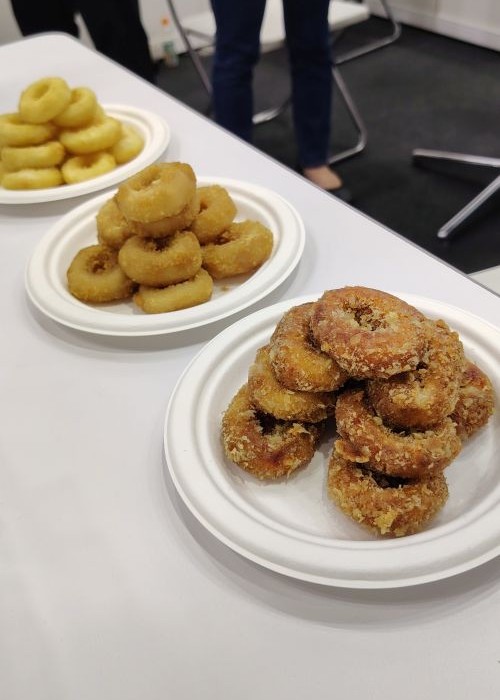
Skewered rice cakes are also popular in Korean street food culture. Known as tteok-kkochi, they are typically made with rice cakes threaded onto skewers, fried and coated with a spicy gochujang-based sauce.
At the booth, Eunhye Nongsan CEO Kim Jungsuk said the company aims to offer consumers new and enjoyable ways to experience Korean rice cakes.
“This is our first time exhibiting in Malaysia and we are looking for B2B and B2C distributors,” Kim said.
“Processed foods are a trend now, and we hope to expand overseas, with Malaysia being our first overseas country to exhibit in,” he said via an interpreter.
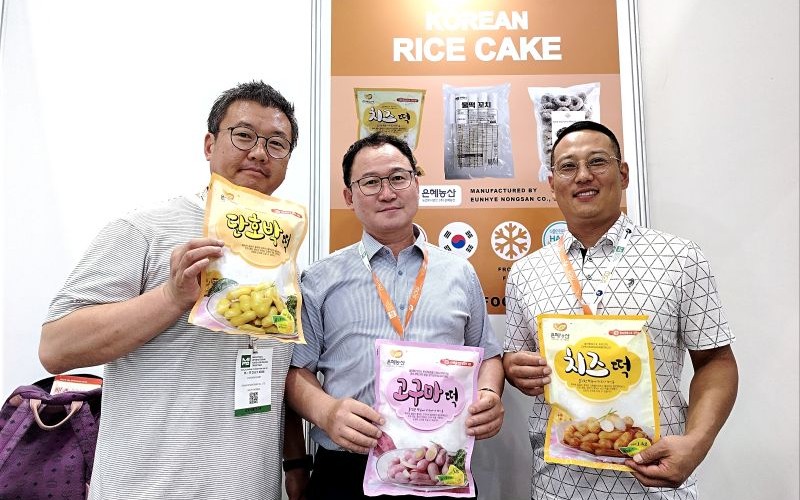
Kim said the company was encouraged by the Korea Rice Foodstuffs Association (KRFA) to participate in the Malaysian exhibition, as Malaysians consume a significant amount of rice-based products.
Founded in 1993, the KRFA is a nonprofit organization representing Korea’s rice processing industry. The association supports Korean rice-food companies seeking overseas markets through international exhibitions, export consultations and promotional activities.
According to Kim, it also provides guidance on halal certification to help companies enter markets such as Malaysia.
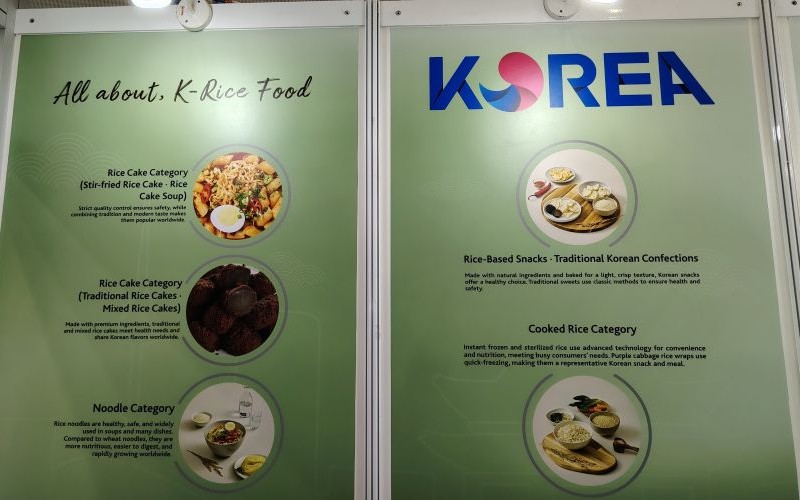
Kim was also curious about rice consumption in Malaysia. For once, the interviewer became the interviewee. Fortunately, the writer had previously visited the Paddy Museum in Sekinchan — a major rice-producing town known as the “Rice Bowl of Selangor,” a state in Malaysia — and was able to provide some information about Malaysia’s own rice industry.
Eunhye Nongsan was not the only Korean company showcasing rice-based products at the exhibition. Woori Food Co., Ltd., a Korean manufacturer of traditional fermented rice cakes, also presented frozen rice cakes that are individually packed for convenience and quality. The company is seeking to expand its traditional Korean foods into international markets.


Comments
Post a Comment